Companion connects PRSS to an AI model. It is free, it works with a model running on your own Mac, and it is what the AI Editor and Autoblogger build on. This walkthrough uses Ollama; any server that speaks the OpenAI API works the same way.
1. Add Companion
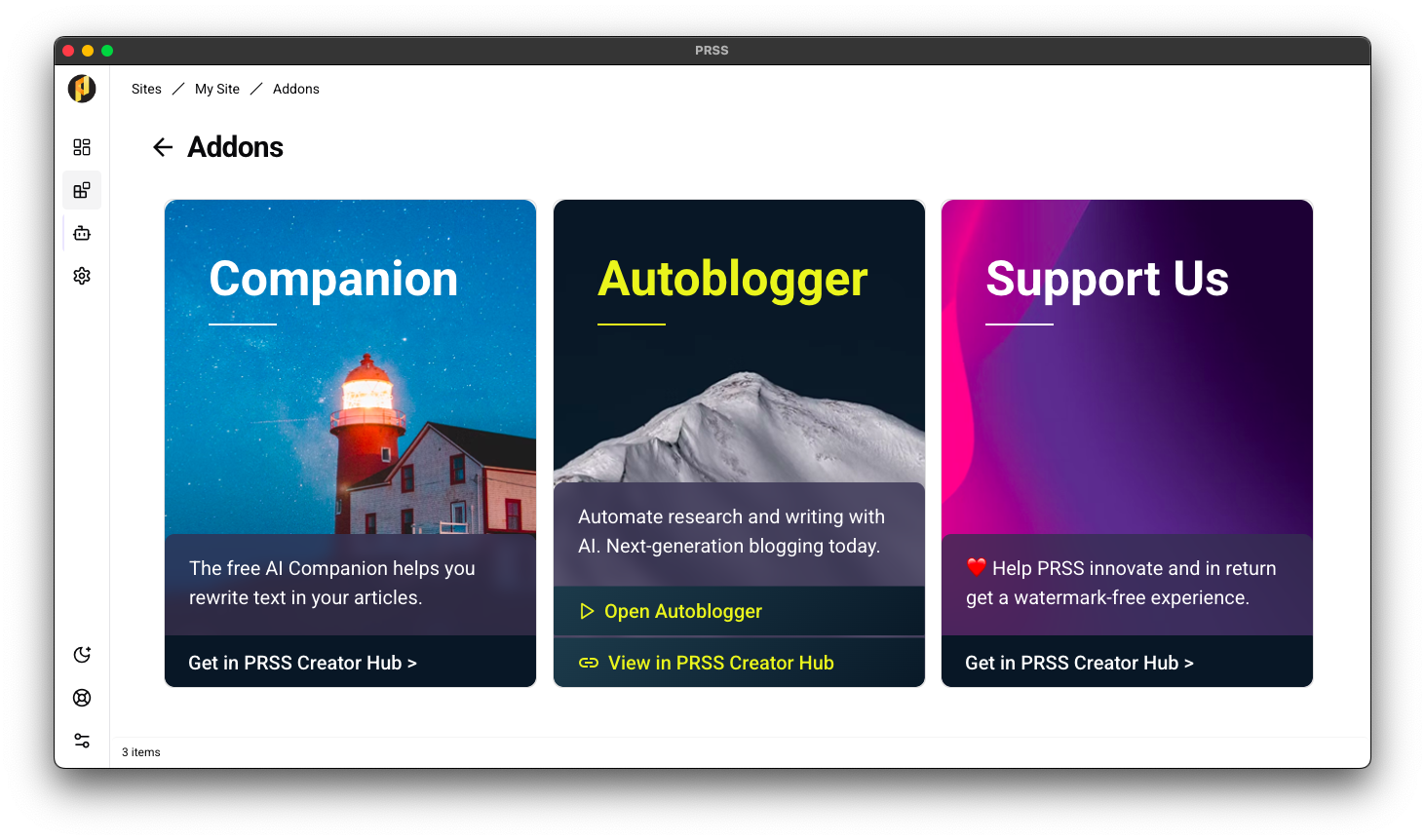
Open Addons in PRSS and click Get in PRSS Creator Hub on the Companion card.
2. Add it to your account
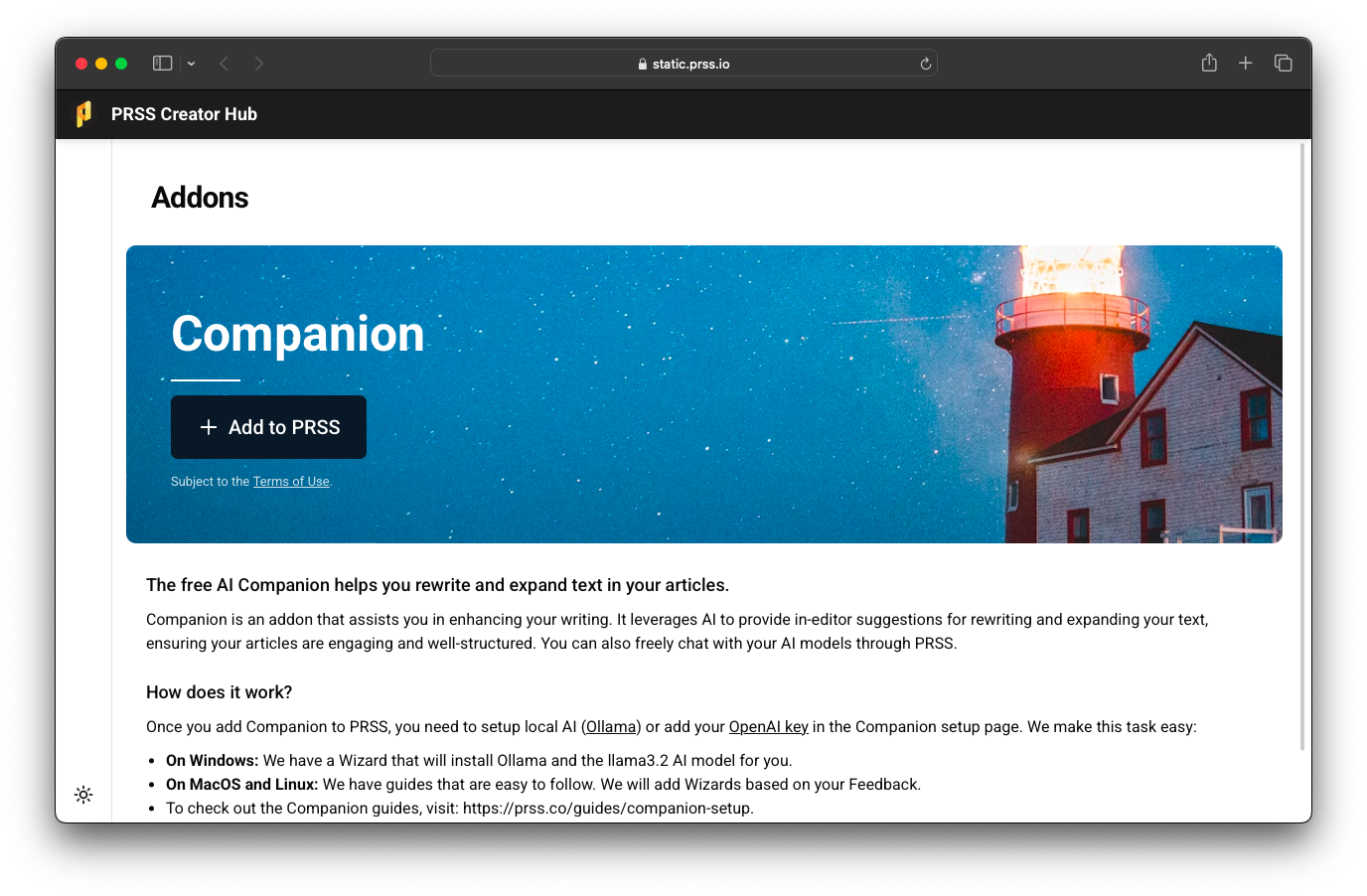
The Hub opens in your browser. Click Add to PRSS — Companion is free.
3. Open Companion
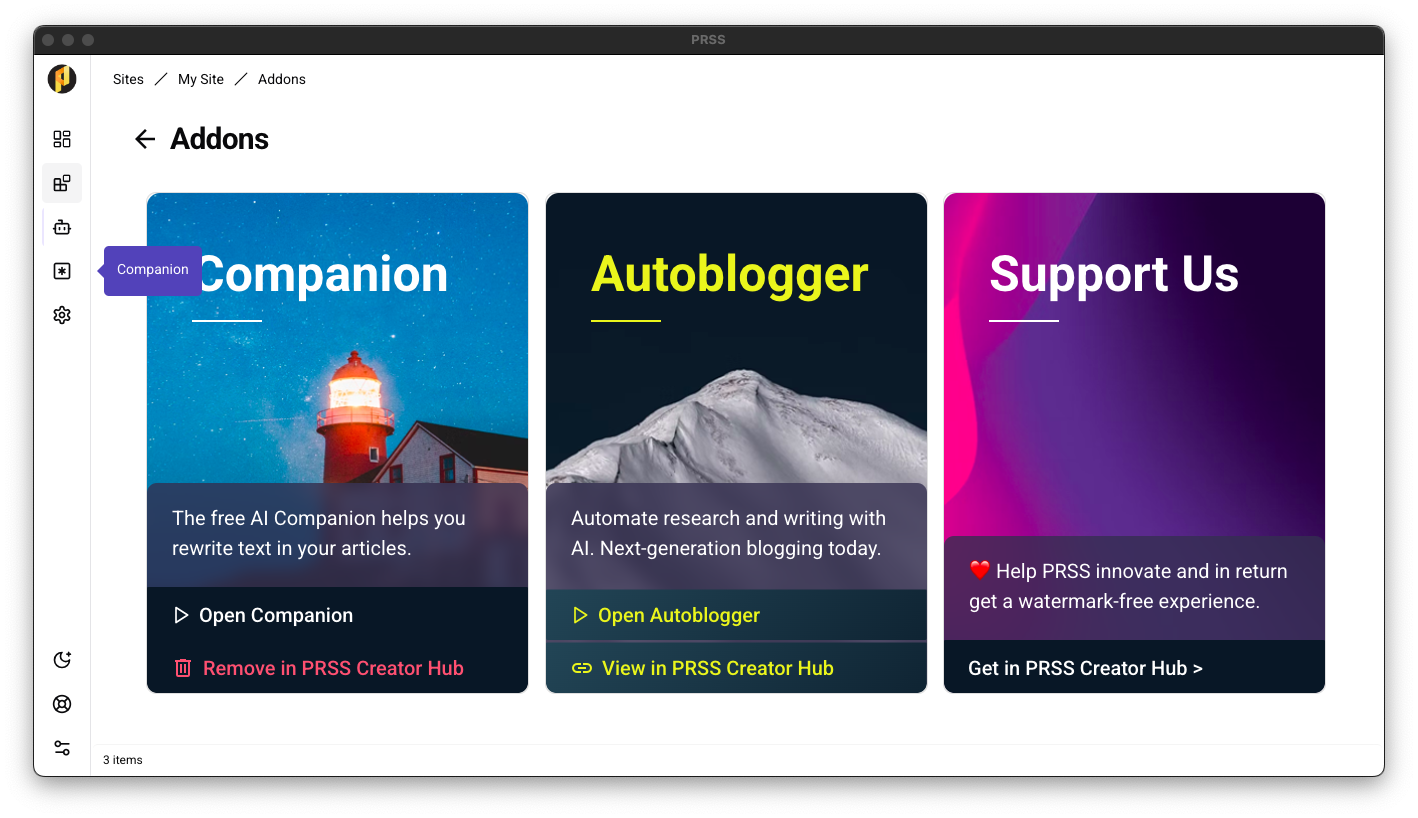
Back in PRSS, click Open Companion, or the menu entry that now appears in the sidebar.
4. Install a model
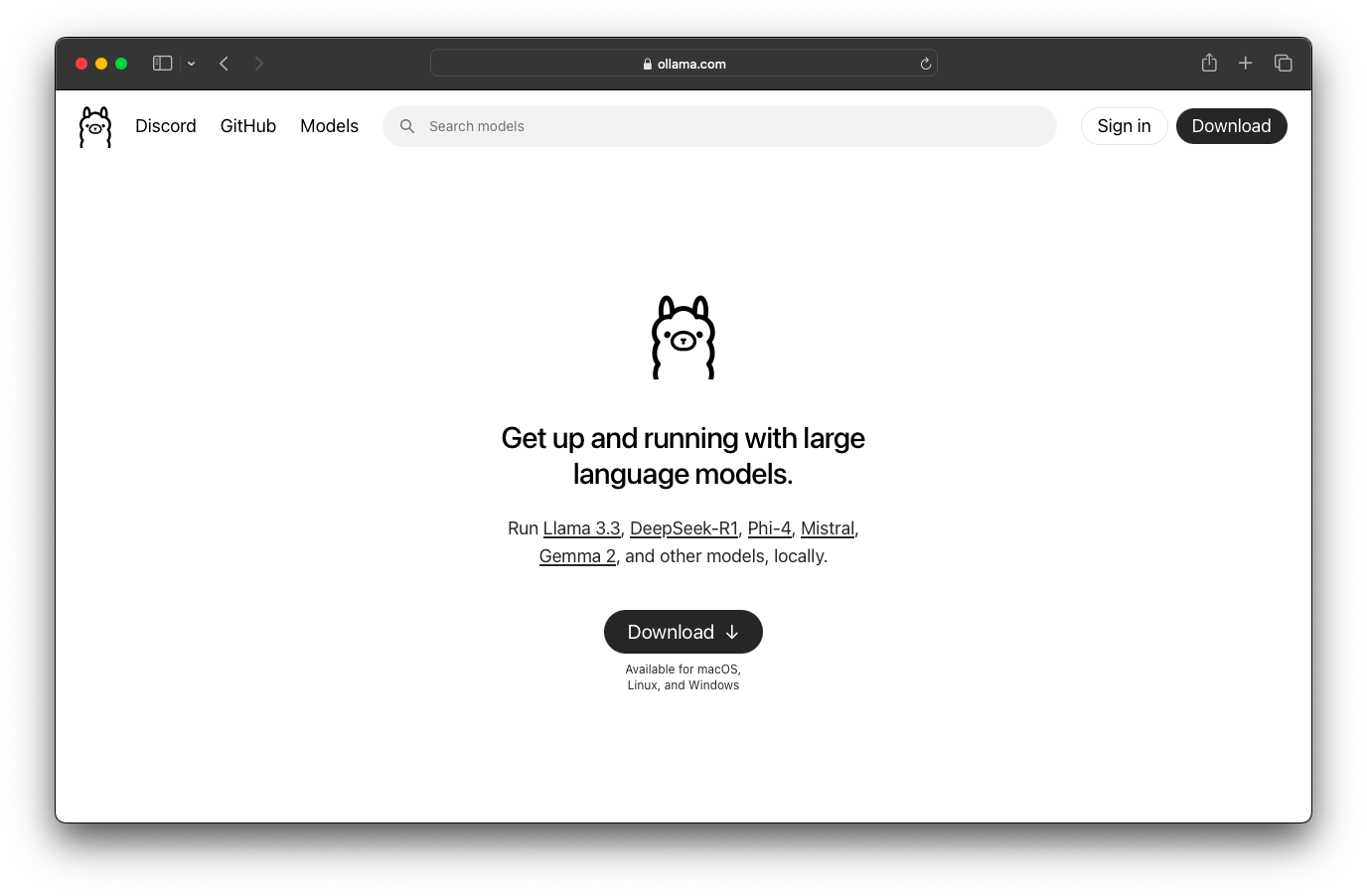
Download Ollama for macOS from ollama.com and run it, installing the command line tool when the installer offers it.
Then pull a model from your terminal. llama3.2 is a good starting point at roughly 2GB; you can try prompts right there once it finishes.
ollama run llama3.2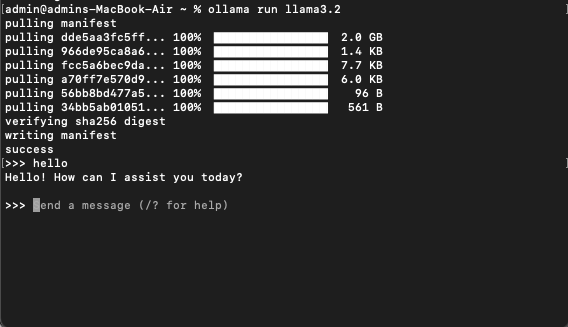
5. Connect PRSS to it
Quit the terminal session and Ollama from the menu bar, then enter the endpoint in Companion's setup tab. PRSS fills in the model name for you; change it if you pulled a different model.
http://localhost:11434/v1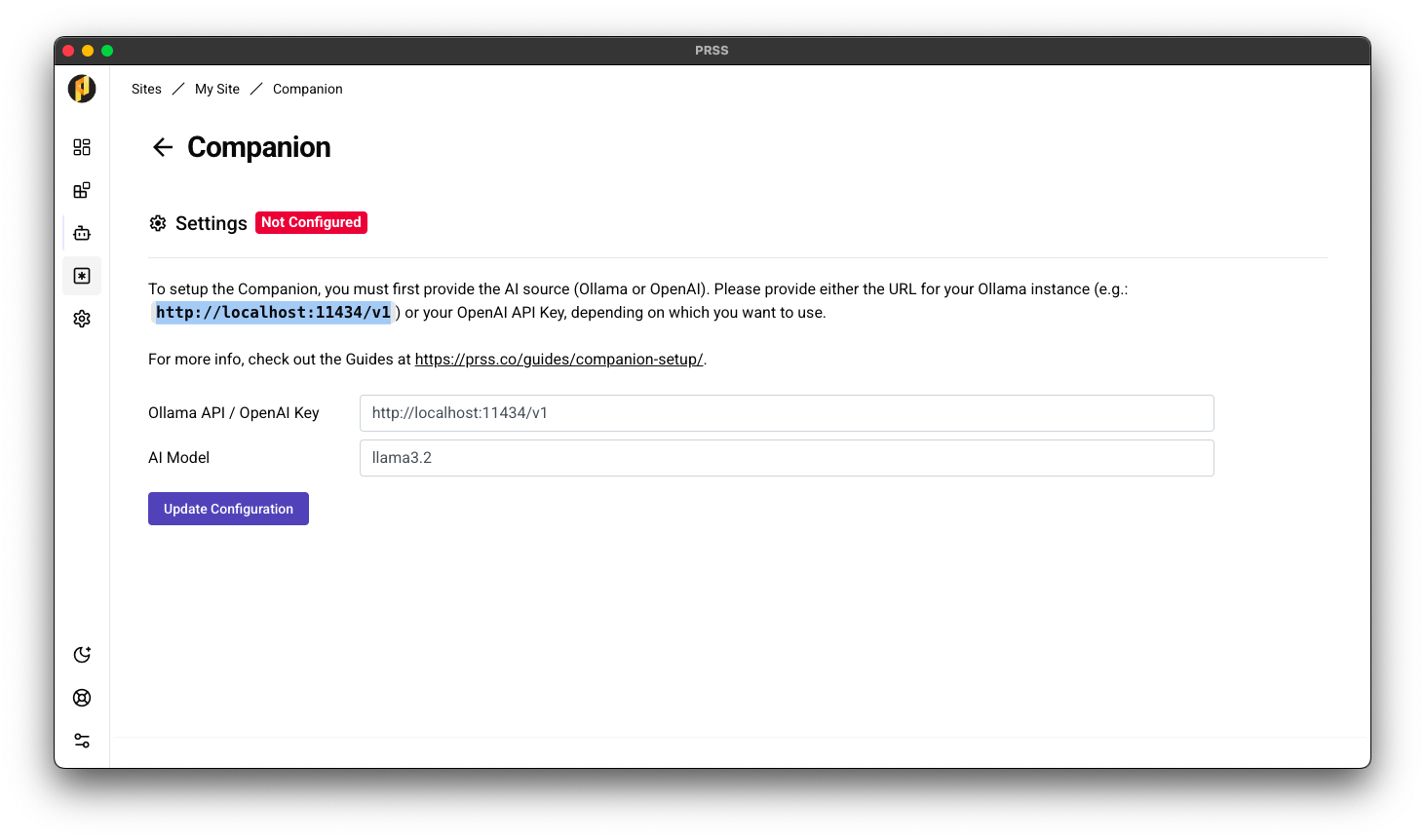
Already running your own server?
Companion also talks to anything that speaks the OpenAI API — llama.cpp's llama-server, LM Studio, vLLM — or to OpenAI itself with your key. Point it at that address instead, name the model it serves, and fill in the API key field only if you started the server with one.
http://localhost:8080/v1Once connected, select text in the post editor and right-click to rephrase, expand or shorten it. The Chat tab is there for trying prompts, and Batch Create writes a whole list of posts in one go.